 Descubre Ronda
Casa del Rey Moro (Moorish King's House): history, facts and how to visit
A Muslim-era water mine and hanging gardens above the Tajo gorge.
History and what to see
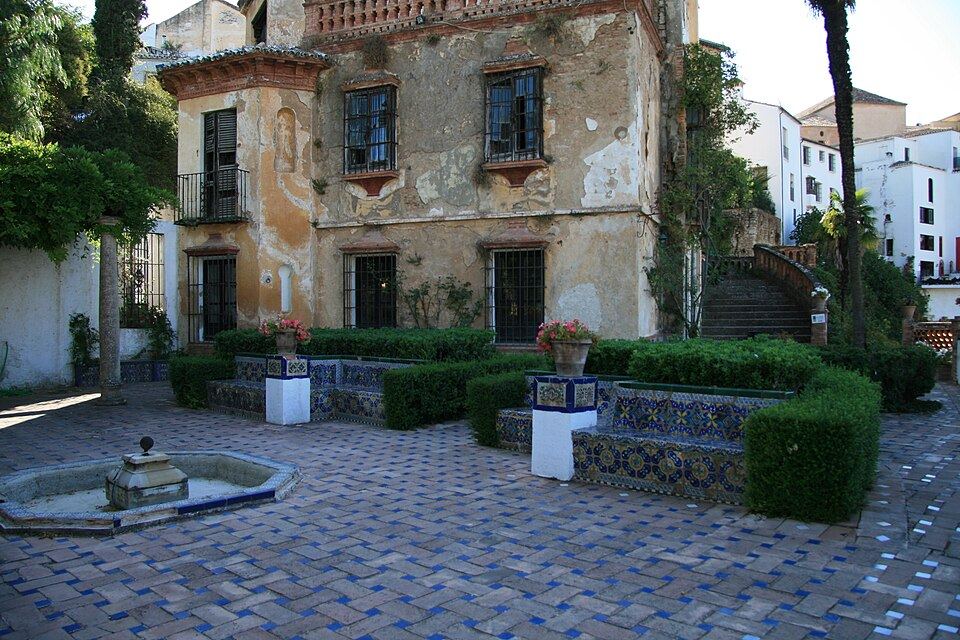
Despite its name, what you visit today isn't really a medieval palace, but a set of three very different elements. The oldest is the Water Mine, from the Muslim period (14th century, under the rule of Abomelic), one of the best-preserved examples in Spain: a staircase carved into the rock descends to the river, allowing the city to be supplied with water even under siege. The Neo-Mudejar-style house that gives the whole complex its name was built in the 20th century, commissioned by the Duchess of Parcent. And the gardens, designed in 1912 by French landscape architect Jean-Claude Forestier, were his first recognised work in Spain: several terraced gardens stepping down the very slope of the Tajo gorge.
Interesting facts
- Despite its name, it isn't a medieval palace: it's a set of three very different parts built in different eras.
- The Water Mine dates from the 14th century, the Muslim period: a staircase carved into the rock leading down to the river, to supply the city under siege.
- The Neo-Mudejar-style house that gives the complex its name was built in the 20th century, commissioned by the Duchess of Parcent.
- The gardens were designed in 1912 by French landscape architect Jean-Claude Forestier — his first recognised work in Spain.
Getting there and accessibility
Getting there: Cuesta de Santo Domingo, 9. Opening hours: 10am-8pm (Oct-Apr) and 10am-9.30pm (May-Sep). Right there is the Fountain of the Five Spouts.
Accessibility: Partially accessible (stairs down to the mine)
Opening hours, prices and access conditions change over time: check the official sources for each place before you go.
Take Casa del Rey Moro (Moorish King's House) with you
Descubre Ronda is a free app with monuments, trails, festivals, where to eat and shop, and audio guide in 6 languages. No sign-up and no intrusive ads.
Get it on Google PlayUse it free in your browserWhat to see nearby
- Palace of the Marquis of Salvatierra
Baroque façade with curious figures of Incan inspiration.
- Mondragón Palace
Ronda's most important civil building, of possible Muslim origin.
- Old Bridge
A single-arch bridge, between the Church of Padre Jesús and the Arch of Philip V, that linked the Ciudad with the Mercadillo before the New Bridge existed.
See also the full list of what to see in Ronda and a walking route through Ronda in one day.