 Descubre Ronda
What to see in Ronda: 28 sights and monuments
Ronda is a city built on the edge of a 98-metre gorge, with an old town of Muslim origin, bridges, palaces, viewpoints and one of Spain’s oldest bullrings. This guide gathers the 28 places covered by Descubre Ronda, with their history and how to get there.
Must-see sights
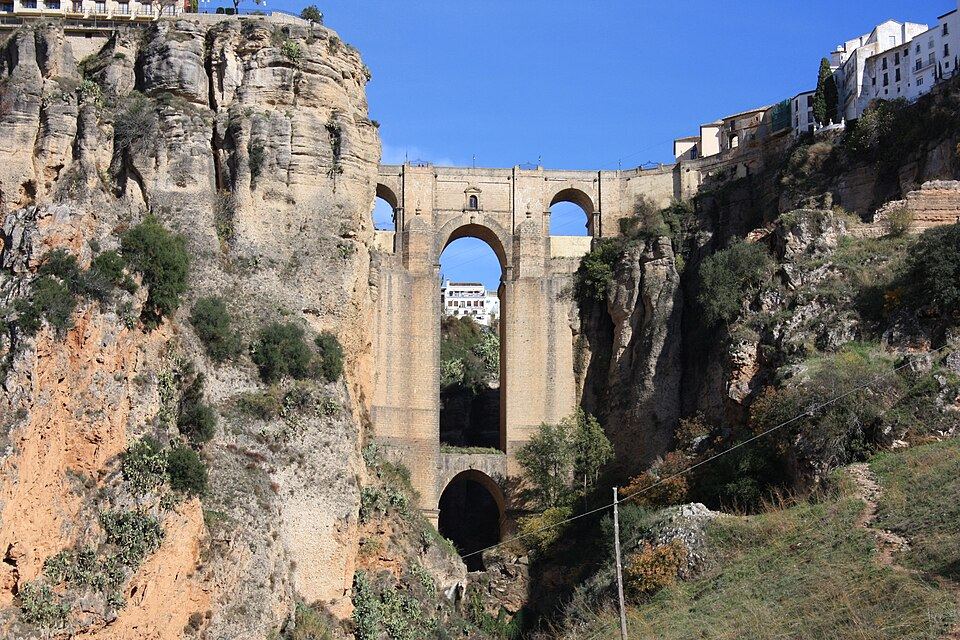
- Puente Nuevo (New Bridge)
Ronda's iconic landmark: 98 metres above the Tajo gorge.
- Bullring (Royal Cavalry of Ronda)
One of the oldest and most monumental bullrings in Spain.
- Arab Baths
The best-preserved Arab baths in the whole Iberian Peninsula.
- Casa del Rey Moro (Moorish King's House)
A Muslim-era water mine and hanging gardens above the Tajo gorge.
- Cuenca Gardens
A terraced viewpoint over the Tajo gorge that locals know better than visitors do.
- Alameda del Tajo
19th-century tree-lined promenade with panoramic views over the Serranía.
Short on time? Follow the Ronda in one day itinerary.
All places, by type
Civil architecture
- Puente Nuevo (New Bridge) — Ronda's iconic landmark: 98 metres above the Tajo gorge.
- Casa del Rey Moro (Moorish King's House) — A Muslim-era water mine and hanging gardens above the Tajo gorge.
- Palace of the Marquis of Salvatierra — Baroque façade with curious figures of Incan inspiration.
- Tanneries Bridge — A bridge of medieval origin, popularly known locally as the Berber Bridge, tucked away below the Old Bridge.
- Old Bridge — A single-arch bridge, between the Church of Padre Jesús and the Arch of Philip V, that linked the Ciudad with the Mercadillo before the New Bridge existed.
- Bullring (Royal Cavalry of Ronda) — One of the oldest and most monumental bullrings in Spain.
- Casa de San Juan Bosco — Mid-19th-century mansion that today houses the Casa Museo Don Bosco, with privileged views over the Tajo gorge.
- Casa del Gigante (Giant's House) — The best-preserved Nasrid palace outside Granada.
- Mondragón Palace — Ronda's most important civil building, of possible Muslim origin.
- Casa Consistorial (Town Hall) — Ronda's Town Hall, built in 1734 over an old arcaded market.
Religious architecture
- Convent of Santo Domingo — Former Dominican convent that once housed the Tribunal of the Inquisition.
- Church of Padre Jesús — Former hermitage of Santa Cecilia, today dedicated to one of the most beloved images of Holy Week.
- Church-Convent of La Merced — Home to an unusual relic: the incorrupt hand of Saint Teresa of Ávila.
- Shrine of the Virgen de los Dolores — A small 18th-century open chapel with unsettling-looking columns.
- Church of Santa Cecilia — Former convent of the Discalced Trinitarians, in Baroque style.
- Church of Santa María la Mayor — Built over an old mosque, with centuries of history layered on top of each other.
- Minaret of San Sebastián — Tower of an old mosque, converted into a Christian bell tower. Popularly known in Ronda as "El Minarete".
- Church of the Espíritu Santo — Gothic-Renaissance church built the very year Ronda was conquered.
Walls and defences
- Islamic Walls and Gates — The defences of the old Muslim Medina, with two well-preserved gates.
- Arch of Philip V — Baroque gateway marking the entrance to the walled city from the Old Bridge.
Archaeology
- Arab Baths — The best-preserved Arab baths in the whole Iberian Peninsula.
- Rock-cut Hermitage of the Virgen de la Cabeza — Mozarabic caves from the 9th-10th centuries, with a Baroque chapel added later.
- Cueva de la Pileta (Pileta Cave) — Cave paintings declared a National Monument in 1924.
- Acinipo Archaeological Site — An entire Roman city, on a large plateau on the outskirts of Ronda.
Viewpoints
- Virgen del Rocío Viewpoint — A little-known viewpoint over the cliffs of the Tajo gorge, with an image of the Virgen del Rocío and views over the countryside.
- Mirador de Ronda ("la Sevillana") — One of the most spectacular viewpoints over the Tajo, known locally as "la Sevillana", right next to the Blas Infante open-air auditorium.
Gardens and promenades
- Cuenca Gardens — A terraced viewpoint over the Tajo gorge that locals know better than visitors do.
- Alameda del Tajo — 19th-century tree-lined promenade with panoramic views over the Serranía.
Opening hours, prices and access conditions change over time: check the official sources for each place before you go.
Take Ronda with you
Descubre Ronda is a free app with monuments, trails, festivals, where to eat and shop, and audio guide in 6 languages. No sign-up and no intrusive ads.
Get it on Google PlayUse it free in your browserMore ideas
Frequently asked questions
What is the most important thing to see in Ronda?
The Puente Nuevo (New Bridge), spanning 98 metres over the Tajo gorge, is Ronda’s most recognisable sight. Together with the bullring, the Alameda del Tajo, the Cuenca Gardens, the House of the Moorish King and the Arab Baths, it makes up the classic route.
How long do you need to see Ronda?
The main sights of the old town can be covered on foot in a day. There is a suggested order in Ronda in one day. With more time, add the hiking trails around the town.
Can you visit Ronda for free?
Strolling through the old town, the Alameda del Tajo or the viewpoints needs no ticket. Other monuments and museums have their own opening hours and prices, which are worth checking before you go.
Is there a free guide to Ronda?
Yes. Descubre Ronda is a free guide with these 28 places, trails, events and an audio guide in 6 languages, available on Google Play and in your browser.